How often
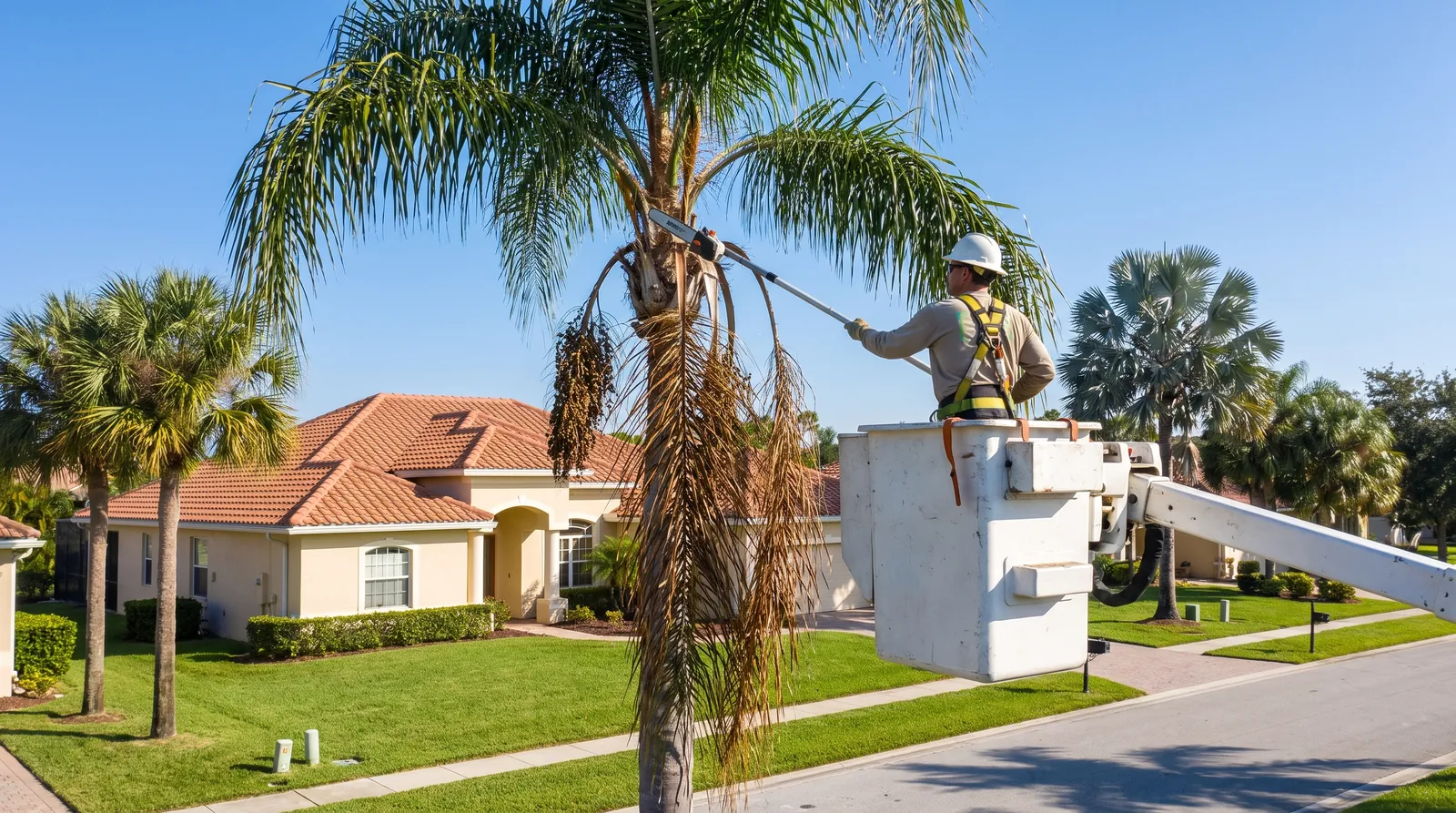
Once or twice a year for most palms in Palm Coast: a spring trim in April or May before hurricane season to remove dead fronds and seed pods, and for fast-growing queens and Washingtonias, a second in fall. Sabal palms can go a year or two. Pygmy dates and other ornamentals are trimmed as they need it. Self-cleaning palms — royals, foxtails, Christmas palms — drop their own fronds and need almost nothing.
What to cut
Dead and fully brown fronds. Fronds hanging below horizontal on a queen or Washingtonia. Seed pods and flower stalks — they're heavy, they drop seeds that sprout everywhere, and they attract rats and palmetto bugs. Loose boots (the old frond bases on a Washingtonia or sabal trunk) when they're a fire or pest concern.
What not to cut: the 9-to-3 rule
Picture the crown as a clock face. Never remove fronds above the 9-and-3 line — the ones that are still green and above horizontal. Palms make their food in those fronds and store nutrients in them; cutting green fronds forces the palm to pull potassium from what's left, which is why "hurricane-cut" palms in Palm Coast show yellowing, frizzled new growth and a pencil-thin trunk section a year later. The University of Florida's guidance is the same: dead and yellow fronds only, and never more than the palm can replace.
The hurricane cut
Every May, someone sells "hurricane trimming" that leaves a palm with three or four upright fronds. It does not help the palm survive wind — a full, healthy crown sheds wind better — and it weakens it going into the storm. Remove dead fronds and seed pods before season and leave the green.
Signs a palm needs more than a trim
- The center spear is brown or missing. The palm is dead or dying; there's no coming back once the bud fails.
- Lowest fronds bronzing from the tips, fruit dropping early on a queen, sabal or date: lethal bronzing. No cure once symptoms show; removal slows the spread to your other palms.
- A conk (shelf fungus) at the base of the trunk: Ganoderma butt rot. The palm will fail at the trunk; remove it and don't plant a palm in the same spot.
- Yellowing with frizzled, stunted new growth: usually potassium or manganese deficiency from over-trimming or poor soil — treatable with the right palm fertilizer, not more trimming.
- Trunk narrowing then widening again: a past period of stress, often over-trimming; the palm survived, and the fix is to stop.
What it costs
$60 to $180 per palm for queens and sabals from the ground or a bucket, $150 to $400 for tall Washingtonias, with multi-palm and contract discounts. Removal of a dead palm is $150 to $2,800 depending on height and what's under it.
Common questions
Can I trim palms myself?
The small ones, with a pole saw and the 9-to-3 rule. Anything you'd need a ladder for is where people get hurt — a 30-pound frond or a falling boot from 25 feet is a real injury.
Do sabal palms need trimming?
Rarely. Sabals are Florida's state tree and thrive when left alone; remove seed pods and dead fronds if you want them tidy, and never skin the boots off a young one.
Why are my queen palm's new fronds yellow and frizzled?
Usually manganese deficiency (frizzle top), often after over-trimming. A palm-specific fertilizer with manganese and potassium fixes it over a year; trimming makes it worse.
Should I remove the boots from my Washingtonia?
Optional. Skinned trunks are a look; loose boots are a fire risk near the house and harbor pests. Both are fine for the palm.
Can lethal bronzing be treated?
Prevented with oxytetracycline injections every three to four months on high-value palms; not cured once symptoms appear. Infected palms should come out to protect the rest.
Related: Palm trimming · Palm removal · Hurricane preparation · Commercial & HOA palm programs